
Attainable -
Social Employment and
Wellbeing Platform
UX, UI, Branding
Sector: Health & Community
Role: Research Lead, Product & UX/UI Designer
AttainAble is an early-stage digital platform designed to support people living with chronic illness by improving access to social connection, flexible employment and wellbeing resources. People living with chronic illness often have valuable experience and skills but face barriers to fully participating in work, social and support environments due to fluctuating energy levels, limited flexibility and fragmented support systems.
The project focused on designing a more connected and supportive ecosystem that could help individuals navigate employment, community and wellbeing in a way that respected both their capacity and lived experience.

[ The Problem ]
People living with chronic illness often navigate fragmented experiences across work, wellbeing and support systems, requiring them to constantly manage limited physical and mental energy while balancing employment, healthcare, social connection and daily responsibilities.
Key challenges included difficulty finding flexible employment aligned to fluctuating capacity, navigating multiple disconnected platforms for support and wellbeing, limited visibility into available resources, and barriers around asking for or receiving meaningful support. Research also highlighted a broader lack of understanding across employers, peers and wider support networks.
The challenge was to design a more cohesive platform experience that could reduce cognitive and emotional load, improve access to support and flexible opportunities, and foster stronger connection between individuals and their wider communities.
[ Discovery & Research ]
As Research Lead, I led a team of 10 designers through an intensive discovery and strategy phase focused on understanding the lived experiences of people managing chronic illness.
Through stakeholder engagement, user interviews, behavioural mapping and landscape analysis, we identified key emotional, social and operational challenges shaping how users navigate employment, wellbeing and support systems. Research extended beyond functional needs, uncovering the emotional strain created by fluctuating energy levels, fragmented support networks and the cognitive load associated with managing multiple disconnected services and platforms.


[ Key Insights ]
Several key themes emerged through research:
-
Energy was the primary constraint: Users carefully managed limited daily energy, which impacted their ability to work, socialise and complete everyday tasks. Research surfaced The Spoon Theory as a widely recognised framework used within chronic illness communities to describe fluctuating energy levels, ultimately informing how the platform approached interaction, support and task management.
-
Platform fatigue created cognitive overload: Managing multiple disconnected apps and services across work, wellbeing and support systems increased friction and reduced engagement.
-
Support systems lacked visibility: Friends, family and allies often wanted to help but lacked visibility into when or how support was needed.
-
Employment structures rarely aligned to capacity: Traditional work models often failed to accommodate fluctuating energy levels and changing capacity.
-
Emotional safety was critical: Users needed environments where vulnerability, communication and support felt safe, understood and non-judgemental.
These insights shaped both the product strategy and broader experience design direction.


[ Design Strategy ]
The design strategy focused on creating a more connected, flexible and supportive ecosystem centred around fluctuating capacity and lived experience. The platform aimed to consolidate fragmented needs into a more cohesive experience while balancing independence with accessible support systems, emotional safety and stronger social connection.
A key framework informing the product was The Spoon Theory - a concept widely used within chronic illness communities to describe fluctuating daily energy levels. This became foundational to how the platform approached interaction design, task management and support visibility across the user experience.

[ Product Experience ]
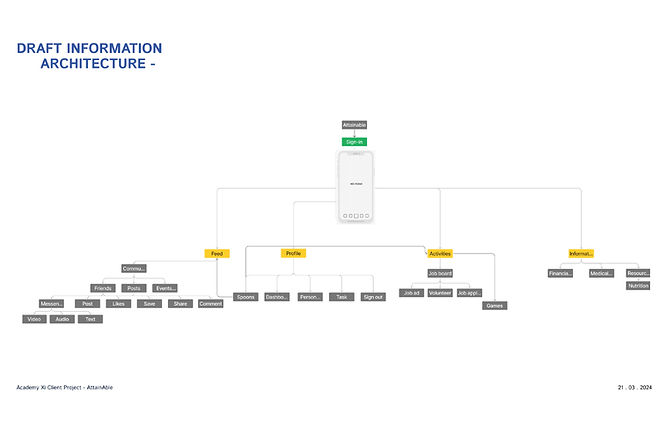
The platform was designed as an integrated ecosystem combining social connection, flexible employment and wellbeing support within a single experience. Core functionality included energy tracking informed by The Spoon Theory, community support systems, flexible employment matching and integrated wellbeing resources designed to adapt around fluctuating user capacity. A strong focus was placed on reducing cognitive load, improving support visibility and creating emotionally safe interactions across the platform experience. Social and communication features were designed to foster connection, while employment workflows prioritised flexibility, accessibility and varying levels of daily capacity.
My role included leading research direction and insight synthesis, facilitating workshops and alignment sessions, translating behavioural insights into product opportunities, and contributing to information architecture, interaction flows and high-fidelity product concepts.


[ Outcome ]
The project brought together fragmented work, wellbeing and support needs into a more cohesive platform experience designed around fluctuating capacity, accessibility and emotional wellbeing. By centring the experience around energy management and support visibility, the platform reduced cognitive load while improving access to flexible opportunities, social connection and community support.
The final product direction was positively received by stakeholders and established a strong strategic foundation for future development and funding opportunities.
