
Archipro -
B2B Analytics Platform
UX, UI
Sector: Architecture & Design Platform
Role: UX/UI Designer (working alongside UX Lead, UI Designers and Product Marketing)
ArchiPro is a digital platform connecting architects, designers and suppliers across the architecture and construction industry. As the platform expanded the team identified an opportunity to develop a new analytics product that would give businesses clearer insight into how their profiles and products were performing on the platform. The goal was to transform complex data into meaningful insights that would help businesses understand customer engagement, track performance and make more informed marketing and commercial decisions.

[ The Problem ]
Businesses using ArchiPro had limited visibility into how their presence on the platform was performing. While engagement data existed, it was difficult to access, interpret and translate into meaningful business insights. Users lacked a clear understanding of how potential clients were interacting with their profiles, which products or services were generating interest, and where opportunities for growth existed.
Without accessible analytics, many businesses were relying on assumptions rather than data to inform decisions around marketing, content and platform engagement. The challenge was to design an analytics experience that could simplify complex performance data into clear, intuitive insights for a broad range of business users.
[ Discovery & Research ]
Working alongside the UX Lead and product team, I introduced a more research-led discovery process to better understand how businesses were interpreting and engaging with platform data.
Through stakeholder interviews, workshops and behavioural mapping, we identified key workflow challenges, usability gaps and varying levels of analytics literacy across the platform’s user base. Research revealed that ArchiPro served a far broader range of users than initially anticipated, including marketers, architects, designers, wholesalers, sales teams, manufacturers and business owners.
These insights helped shape both product and marketing direction, ensuring the dashboard experience could support users with differing goals, technical confidence and time constraints while surfacing clearer, more actionable business insights.

[ Key Insights ]
Research revealed several key challenges for business users:
-
Limited visibility into engagement: Users lacked a clear understanding of how their profiles, products and projects were performing across the platform.
-
Difficulty translating data into action: Available analytics were often fragmented or difficult to interpret, making it challenging for users to extract meaningful business insights.
-
Unclear relationship between activity and results: Businesses struggled to understand how updates to profiles, products and content influenced engagement, visibility and lead generation.
These insights helped shape the direction of the analytics experience, focusing the product around clarity, accessibility and more actionable business intelligence.

[ Design Strategy ]
The design strategy focused on transforming complex analytics into clear, accessible insights that supported faster and more confident business decision-making. Key principles included prioritising meaningful performance indicators, improving comprehension through data visualisation, and establishing a clear hierarchy of insights so users could quickly identify trends and opportunities.
Workflows were designed to support both high-level overviews and deeper data exploration, ensuring the dashboard remained intuitive for users with varying levels of analytics knowledge and limited time availability.


[ Product Experience ]
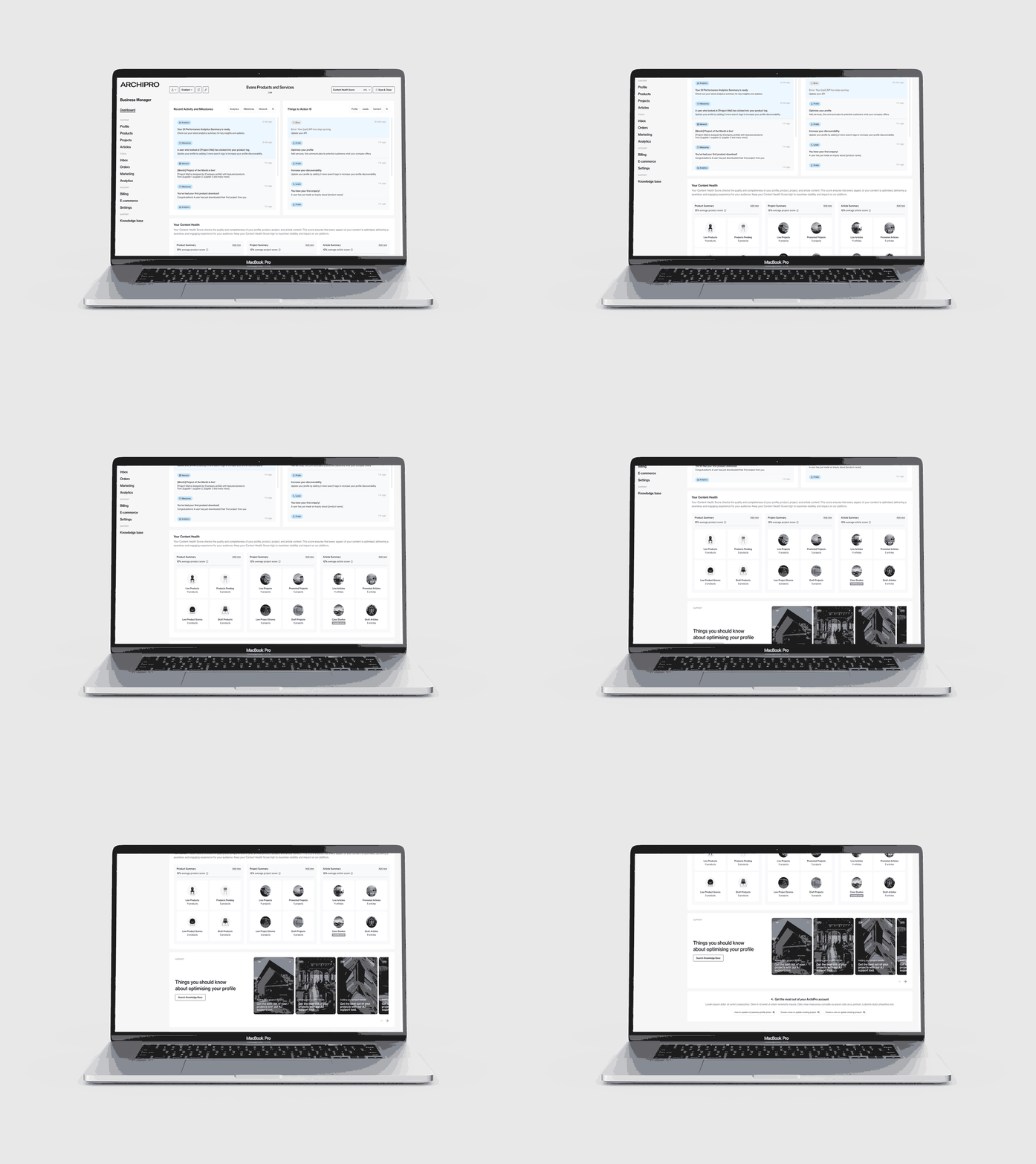
The analytics platform was designed to give businesses a clearer understanding of how their presence on ArchiPro was performing across projects, products and customer engagement.
The interface combined dashboard summaries, visual performance trends and layered engagement insights to help users quickly interpret data and identify opportunities for growth. A strong focus was placed on clarity, navigation and information hierarchy to simplify complex performance data for users with varying levels of analytics knowledge.
My role involved translating research insights into product opportunities, developing interface concepts and interaction flows, and collaborating closely with UI designers and product marketing teams to ensure insights were both intuitive and commercially meaningful.



[ Outcome ]