SeeStone -
AI-Powered Fashion Buying Platform
UX, UI, Branding
Sector: Fashion
Role: Product, Brand & UX/UI Designer
SeeStone is an AI-powered B2B buying platform designed to help fashion retailers make faster, more informed seasonal purchasing decisions. Fashion buyers traditionally rely on spreadsheets, manual analysis and instinct when planning seasonal orders - a process that is time-intensive, difficult to scale and often contributes to over-buying, unsold inventory and heavy markdowns.
SeeStone was created to simplify this workflow by translating complex buying data into clearer, more intuitive insights that support faster and more confident decision-making.


[ The Problem ]
Fashion buying sits at the intersection of creativity, strategy and data analysis. While buyers aim to focus on curating collections and shaping seasonal direction, much of the process is still driven by manual spreadsheet analysis across size curves, sales velocity, stock levels and seasonal demand forecasting. The workflow was time-consuming, difficult to scale across product categories and often limited the ability to identify meaningful patterns quickly.
The challenge was to design a more intuitive buying experience that could reduce manual analysis, surface clearer insights and support faster, more confident purchasing decisions for fashion teams.

[ Discovery & Research ]
To better understand how fashion buyers navigate seasonal purchasing decisions, I conducted stakeholder workshops, user interviews and competitor analysis across existing buying platforms. Research synthesis and behavioural mapping helped identify key workflow inefficiencies, decision-making patterns and pain points across the buying process.


[ Key Insights ]
Research revealed several consistent workflow challenges:
-
Spreadsheet fatigue: Buyers were spending significant time manually analysing large datasets before making purchasing decisions.
-
Limited visibility across trends and categories: While data existed across the buying process, identifying meaningful patterns across categories, sizing and seasonal performance remained difficult.
-
Operational analysis was limiting creative focus: Many buyers felt that time spent processing data was reducing their ability to focus on collection building, trend forecasting and seasonal curation.
These insights informed a product direction focused on simplifying data interpretation, improving visibility across buying patterns and supporting faster, more intuitive decision-making workflows.

[ Design Strategy ]
The design strategy focused on simplifying complex buying data into clearer, more intuitive decision-making workflows. Priority was placed on reducing manual analysis, surfacing the most meaningful insights quickly and creating a dashboard experience that balanced high-level overviews with deeper data exploration.
Because the platform was designed for fashion industry users, the interface also needed to reflect the visual expectations and aesthetic sensibilities of the industry itself. This required balancing a data-heavy product experience with a more refined and brand-conscious visual language that felt aligned with contemporary fashion workflows.




[ Product Experience ]
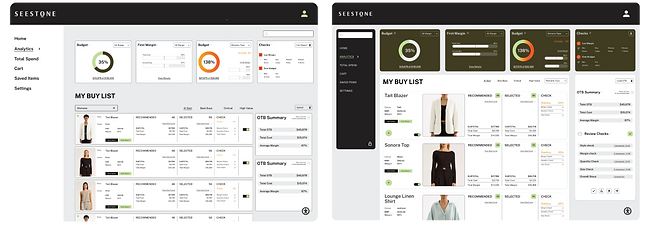
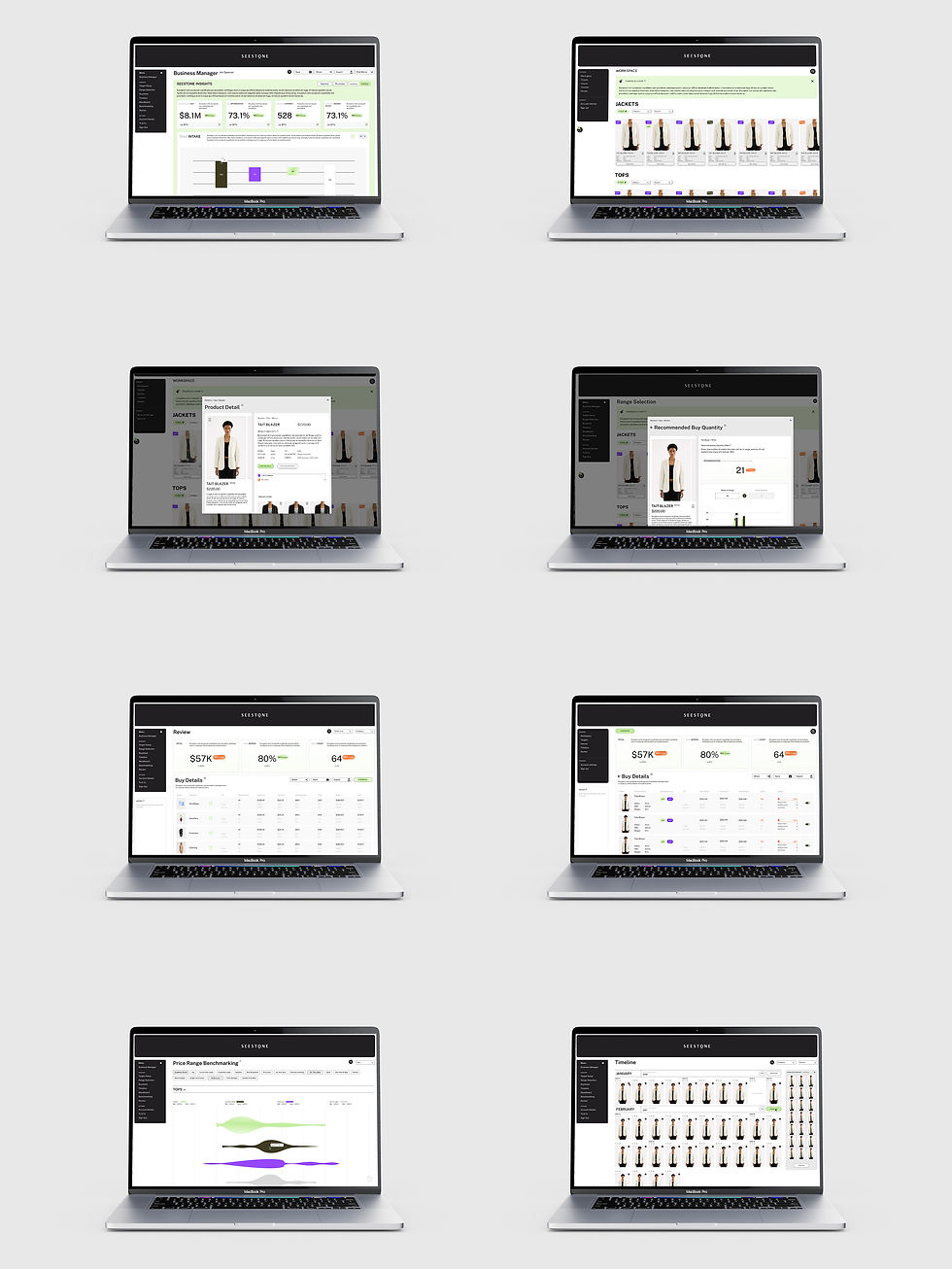
The final product centred around an AI-driven dashboard designed to simplify complex buying workflows and support faster, more confident purchasing decisions. The experience combined visualised size curve recommendations, seasonal demand forecasting, streamlined purchase confirmation flows and integrated moodboarding tools to support both analytical and creative aspects of the buying process. The interface focused heavily on clarity, hierarchy and usability, enabling buyers to quickly assess product performance, compare recommendations and navigate large volumes of data more intuitively.

[ Outcome ]
The platform streamlined the seasonal buying process by replacing manual spreadsheet analysis with clearer, more intuitive visual insights. This enabled buyers to make faster purchasing decisions while spending more time on the creative aspects of their role - curating collections, identifying trends and shaping seasonal direction. The project also established the foundational product experience and visual identity for the evolving SeeStone platform.
[ Brand Identity ]
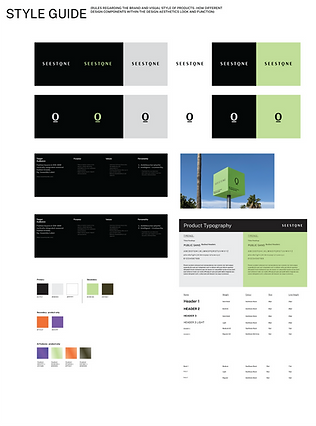
Alongside the product experience, I developed the visual identity for the SeeStone platform to create a brand that felt intelligent, contemporary and aligned with the visual culture of the fashion industry.
The identity balanced clarity and sophistication, combining the aesthetic expectations of fashion buyers with the trust, structure and usability required for a data-driven B2B product experience.